
SILK Surgery in Hyderabad: Advanced Bladeless Vision Correction
Imagine seeing the world clearly without reaching for your glasses or fumbling with contact lenses. For many people in Hyderabad, that possibility is now closer than ever, thanks to a modern vision correction procedure called SILK surgery. It represents one of the most advanced approaches to laser vision correction available today.
SILK surgery offers a bladeless, flapless, and minimally invasive way to correct common vision problems. If you have been considering laser vision correction but felt unsure about the older methods, SILK is worth understanding. This guide explains what SILK surgery is, how it differs from other procedures, its benefits, and who it suits — so you can decide whether it might be right for your eyes.
What Is SILK Surgery?
SILK is an advanced form of laser vision correction that reshapes the cornea — the clear front surface of the eye — to correct refractive errors. It corrects short-sightedness (myopia) and astigmatism, reducing or removing the need for glasses and contact lenses.
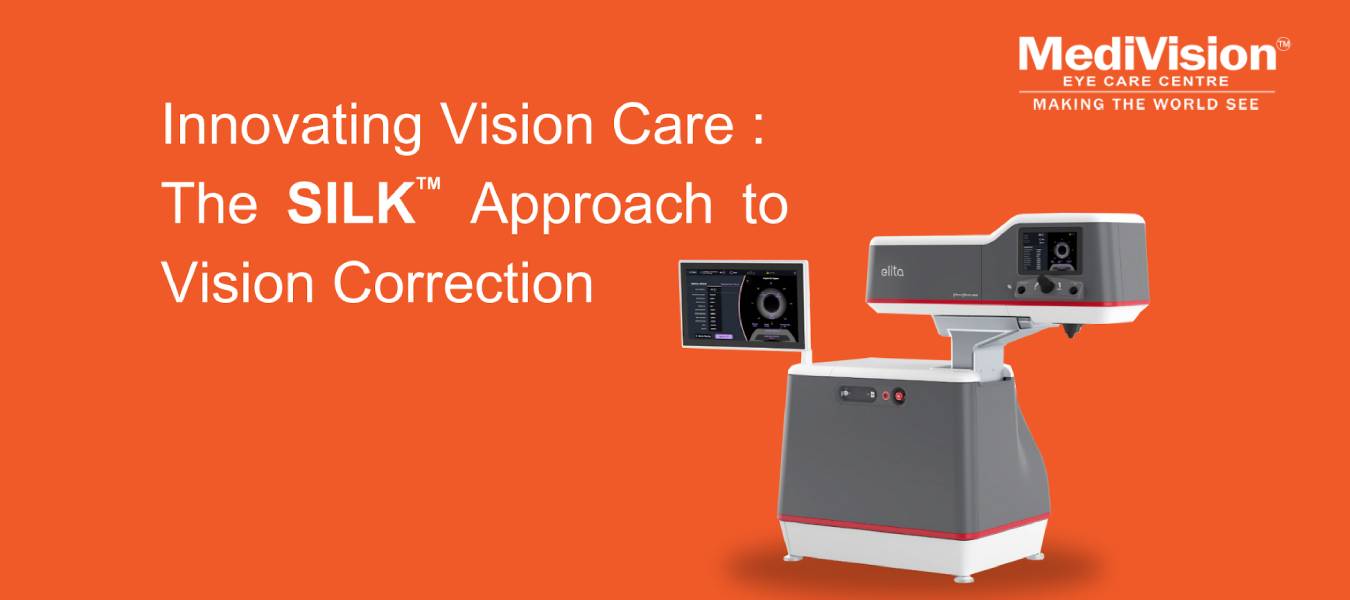
What makes SILK stand out is how gentle and precise it is. It is a bloodless, flapless, and minimally invasive procedure, representing a modern approach to vision enhancement. Rather than using older, more invasive techniques, SILK uses advanced femtosecond laser technology to correct vision with remarkable comfort and precision. For many patients, it offers a smoother, more reassuring experience than they expected from eye surgery.
How Is SILK Different From Other Refractive Surgeries?
The key difference lies in how SILK accesses and reshapes the cornea. Traditional laser vision correction methods often involve creating a corneal flap. SILK takes a different, gentler approach.
Unlike flap-based methods, SILK uses advanced laser technology that eliminates the need for a corneal flap. Instead, the laser creates a small, precisely shaped piece of tissue (a lenticule) within the cornea, which is then gently removed through a tiny opening. This means:
- No corneal flap — removing flap-related risks entirely
- Bladeless procedure — the entire process is guided by laser, with no mechanical cutting
- Minimally invasive — only a tiny opening is needed, preserving more of the cornea’s natural strength
- Comfortable experience — most patients find it gentle, with a smooth recovery
Because it disturbs less of the cornea, SILK preserves more corneal strength and can reduce the risk of dry eye compared with flap-based methods. This innovative technique prioritises both safety and precision. To compare it directly with LASIK, see our guide on LASIK and SILK eye surgery.
The Benefits of SILK Surgery
SILK offers several genuine advantages that make it an appealing option for suitable candidates:
- Flapless and bladeless — no corneal flap means no flap-related complications
- Preserves corneal strength — more of the natural cornea stays intact
- Reduced dry eye risk — fewer corneal nerves are disturbed during the procedure
- Quick, comfortable recovery — with no flap to heal, recovery is generally smooth
- High precision — advanced laser technology works with micron-level accuracy
- Suitable for active lifestyles — the absence of a flap is a real advantage for those in sports or physically demanding routines
These benefits make SILK one of the most refined vision correction options available — combining precision, safety, and comfort in a single procedure.
Is SILK Surgery Safe?
Understandably, many people feel nervous about the idea of eye surgery. It is completely natural to have concerns. The reassuring reality is that SILK is designed with safety and precision at its core.
Because it is bladeless and flapless, SILK removes several of the risks associated with older techniques. The procedure prioritises safety, giving patients the confidence to improve their vision without the fear of pain or complications. As with any procedure, the most important factors are a thorough pre-surgery assessment to confirm you are a suitable candidate, an experienced surgeon, and modern technology. When these are in place, SILK is a safe and effective way to achieve clearer vision.
Who Is a Good Candidate for SILK?
SILK suits many people wanting freedom from glasses, but a proper assessment always confirms suitability. In general, you may be a good candidate if you:
- Are 18 or older with a stable prescription
- Have short-sightedness (myopia), with or without astigmatism
- Have healthy corneas of adequate thickness
- Want a minimally invasive, flapless option
- Are prone to dry eyes and want to reduce that risk
- Lead an active lifestyle where flap safety matters
Whether you struggle with seeing things up close or far away, an assessment will determine whether SILK is right for you, or whether another procedure would suit your eyes better. A detailed evaluation — including corneal mapping and thickness measurement — is the essential first step. To explore all your options, see our comparison of SMILE vs LASIK vs PRK.
Recovery After SILK Surgery
One of SILK’s biggest strengths is its comfortable recovery. Because there is no corneal flap, healing is typically smooth and straightforward. Most patients notice improved vision within a day or two, with vision continuing to stabilise over the following weeks.
To support healing in the early days, you will be advised to avoid rubbing your eyes, use prescribed drops as directed, skip swimming and dusty environments briefly, and wear sunglasses outdoors. Mild dryness or light sensitivity in the first few days is normal and settles quickly. Most people return to their routine activities within a couple of days.
Why Choose MediVision for SILK Surgery
At MediVision, SILK surgery is performed using modern laser technology by experienced refractive surgeons. Every patient begins with a thorough evaluation to confirm suitability and identify the best procedure for their eyes, followed by structured aftercare to support a smooth recovery.
The focus is on customising treatment to each patient’s eyes and needs, rather than a one-size-fits-all approach — recommending SILK when it is the right fit, or an alternative when that suits better. This combination of advanced technology, experienced surgeons, and honest, personalised care is what leads to safe, accurate, lasting results for patients across Hyderabad and beyond.
See the World in a Whole New Light
SILK surgery offers a modern, gentle, and precise path to clearer vision — bladeless, flapless, and minimally invasive. For the right candidate, it is one of the most refined ways to achieve freedom from glasses and contact lenses.
If you are ready to explore clearer vision and want to find out whether SILK is right for your eyes, book a consultation at MediVision for a full assessment and honest, expert guidance.
Frequently Asked Questions
What is SILK surgery?
SILK is an advanced, bladeless and flapless laser vision correction procedure that reshapes the cornea to correct short-sightedness and astigmatism.
How is SILK different from LASIK?
Unlike LASIK, SILK does not create a corneal flap. It works through a tiny opening, preserving more corneal strength and reducing dry eye risk.
Is SILK surgery safe?
Yes. Being bladeless and flapless removes several risks of older methods. With a proper assessment and experienced surgeon, SILK is safe and effective.
Is SILK surgery painful?
No. SILK is performed under numbing drops, so you feel no pain during the procedure, with only mild, temporary discomfort during healing.
Who is a good candidate for SILK?
Adults over 18 with a stable prescription, healthy corneas, short-sightedness or astigmatism, especially those wanting a minimally invasive option.
What is recovery like after SILK?
Recovery is quick and comfortable. Most people notice clearer vision within a day or two and return to routine within a couple of days.