
Cataract Surgery — Advanced Eye Treatment at a Trusted, NABH-Accredited Eye Care Hospital
Restoring clear vision through precision cataract surgery, premium IOL options, and comprehensive eye care — trusted by over 1.20 lakh patients.
Cataracts are the world's leading cause of treatable blindness — yet with the right advanced eye treatment, clear vision can be fully restored. Our NABH-accredited eye care hospital brings together experienced eye specialist doctors, state-of-the-art surgical technology, and compassionate, patient-first care to deliver outstanding cataract surgery outcomes.
What Is a Cataract? A Guide from Our Eye Care Hospital
The most common cause of vision loss worldwide — and one of the most treatable conditions in comprehensive eye care.
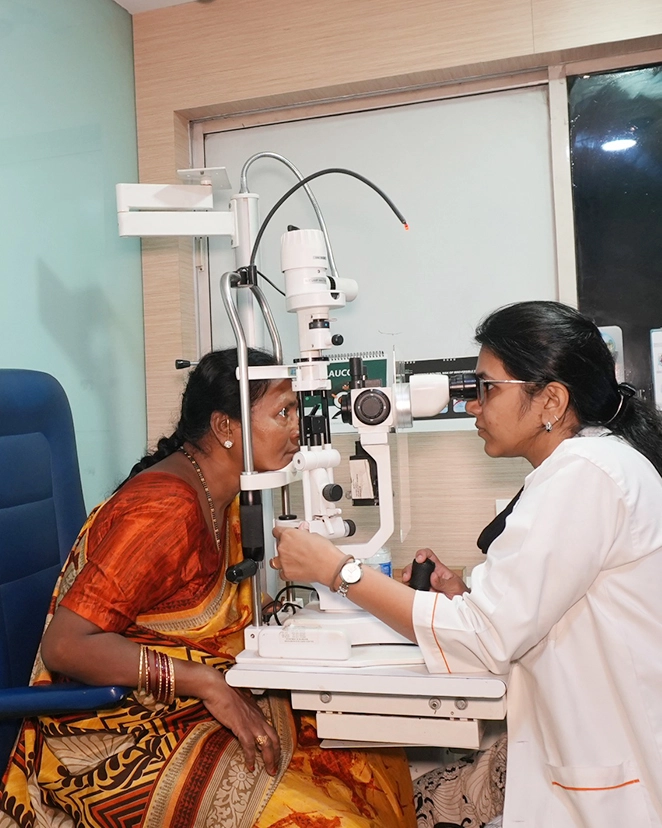
The eye's natural lens sits behind the iris and pupil, focusing light precisely onto the retina to produce clear, sharp vision. When this lens becomes progressively cloudy — a condition known as cataract — the light passing through it is scattered rather than focused, causing vision to become blurred, hazy, or dim.
Cataracts are a leading reason patients visit our eye care hospital for a comprehensive eye checkup. They develop gradually over months or years. In the early stages, vision changes may be subtle and manageable. Over time, the cloudiness deepens and begins to interfere with daily activities — reading, driving, watching television, recognising faces. At this point, advanced eye treatment in the form of cataract surgery — replacing the cloudy lens with a clear artificial intraocular lens (IOL) — is the only effective solution.
As part of our comprehensive eye care programme, our eye specialist doctors screen for cataracts during every routine eye checkup, since cataracts often develop alongside conditions such as glaucoma, retina disease, and diabetic eye changes that also need attention.
While cataracts are most commonly age-related, they also occur as a result of eye injury, prolonged steroid use, systemic conditions such as diabetes, or — in children — as congenital or developmental cataracts requiring early paediatric eye care.
Cataract surgery is one of the safest, most performed surgical procedures in the world — and at MediVision, it is backed by over 1.20 lakh successful procedures.
Who Is at Risk? Risk Factors for Cataract Development
Proactive eye care starts with understanding your individual risk. Annual eye checkups are essential.
Our eye care hospital sees patients across all age groups presenting with cataracts — from age-related lens clouding in older adults to traumatic and congenital cataracts in younger patients and children. Understanding your risk factors allows for earlier detection, more treatment options, and better outcomes.
Key Risk Factors Our Eye Specialists Screen For
Advancing Age
The most significant risk factor. The natural lens loses clarity and flexibility with age, making cataracts increasingly common after 60. Regular eye checkups after 40 are strongly recommended.
Diabetes & Metabolic Conditions
Elevated blood sugar accelerates lens protein changes. Diabetic patients are assessed for cataract progression at every retina care visit, as part of comprehensive eye care for diabetes.
Previous Eye Injury or Trauma
Physical damage to the eye can disrupt lens structure, causing traumatic cataract at any age. A history of eye trauma warrants a thorough checkup even without symptoms.
Prolonged Steroid Use
Long-term corticosteroid use — systemic, inhaled, or topical — is a well-recognised risk factor for posterior subcapsular cataract, one of the fastest-progressing types.
Chronic Eye Inflammation
Repeated or prolonged intraocular inflammation (uveitis) causes lens changes over time, often alongside conditions managed as part of comprehensive eye care.
Smoking & UV Exposure
Both independently increase cataract risk and are associated with earlier onset. Protective eyewear and lifestyle changes are part of our preventive eye care guidance.
Glaucoma History
Patients receiving glaucoma treatment are at elevated risk for cataract, from both the condition and certain medications. We manage both as part of integrated eye care.
Congenital & Paediatric Cataracts
Caused by genetic conditions, metabolic disorders, or intrauterine infection. Prompt detection through paediatric eye care is critical to prevent amblyopia.
If you have one or more of these risk factors, book a comprehensive eye checkup at our eye care hospital — early detection changes outcomes.
Book Your Eye CheckupRecognising Cataract Symptoms — When to Visit an Eye Specialist
Early symptoms are subtle. Do not wait for vision loss to affect your independence.
Many patients presenting to our eye care hospital for a routine eye checkup are unaware they have a developing cataract. The gradual nature of vision change means patients often adapt without realising how much their sight has deteriorated. Knowing the warning signs prompts earlier consultation — and earlier advanced eye treatment means safer, simpler surgery.
Common Symptoms That Bring Patients to Our Eye Specialist Doctors
Blurred or Cloudy Vision
Objects appear foggy or out of focus, as if looking through frosted glass — the most common presenting symptom at our hospital.
Fading or Yellowing of Colours
Colours appear less vivid or take on a yellow-brown cast, affecting quality of life and daily tasks.
Light Sensitivity & Glare
Bright sunlight, indoor lighting, and oncoming headlights cause discomfort or dazzle — a leading reason patients seek treatment.
Coloured Halos Around Lights
Particularly noticeable at night, and a common reason patients report difficulty driving after dark.
Double Vision in One Eye
A ghost image overlapping the primary image, distinct from binocular double vision caused by other conditions.
Frequent Prescription Changes
Needing updated glasses more often than usual is a common early indicator picked up during routine checkups.
Difficulty Reading in Low Light
Fine print becomes harder to see without bright, direct light.
When Should You See an Eye Specialist?
Visit our eye care hospital for a comprehensive eye checkup if:
- Any of the above symptoms are present and affecting daily life
- You are over 40 and have not had an eye checkup in the past 12 months
- You have diabetes, a history of glaucoma treatment, or other cataract risk factors
- You are due for a vision correction review and have noticed recent changes
Our eye specialist doctors will assess not just the cataract but your complete eye health — including retina care, glaucoma screening, dry eye treatment needs, and corneal health — as part of every comprehensive eye examination.
Advanced Cataract Treatment at MediVision Eye Care Hospital
Two advanced surgical techniques. A full range of premium IOLs. One goal: your clearest possible vision.
Cataract surgery is the most effective form of advanced eye treatment for lens clouding, performed to the highest standards of clinical precision and patient safety. Our NABH-accredited eye care hospital offers two surgical approaches, recommended based on each patient's individual cataract characteristics, eye anatomy, and visual goals.
Phacoemulsification
The internationally accepted global gold standard for cataract surgery, and the technique used in the vast majority of cases at our eye care hospital.
A micro-incision of approximately 2.2–2.8 mm is made at the corneal edge. A precision ultrasonic probe emulsifies the cloudy lens into tiny fragments, which are gently suctioned out. A foldable IOL is implanted through the same small incision.
- Self-sealing incision — no stitches required
- Day surgery — home the same day
- Rapid visual recovery within 24–48 hours
- Minimal post-operative restrictions
- Proven safety across millions of procedures globally
Femtosecond Laser-Assisted Cataract Surgery
The most advanced form of cataract eye treatment available today, commonly referred to as robotic cataract surgery. Performed using the CATALYS Precision Laser System, the same laser platform used in leading eye care hospitals worldwide.
A computer-guided femtosecond laser — the same precision technology used in LASIK — performs the incisions, a precisely circular capsulotomy, and pre-softens the lens for easier, lower-energy removal, guided by real-time 3D OCT imaging.
- Extreme precision, far exceeding manual technique
- Excellent predictability for premium IOL outcomes
- Reduced ultrasound energy inside the eye
- Reduces variability in critical surgical steps
- Well suited to complex, dense cataracts
Intraocular Lens (IOL) Options — Vision Correction Tailored to Your Life
The right IOL transforms cataract surgery from vision restoration into vision optimisation.
IOL selection is one of the most personalised aspects of cataract treatment. Your eye specialist doctor will recommend the lens best suited to your prescription, corneal health, lifestyle, and vision correction goals — after a thorough comprehensive eye examination including advanced biometry and corneal topography.
Monofocal IOL
Clear sight at a single focal distance, typically set for distance. Excellent optical quality — the most widely used IOL worldwide. Reading glasses needed for near work.
Aspheric IOL
An advanced monofocal design that minimises spherical aberrations for sharper, higher-contrast vision — particularly valuable in low light or for frequent drivers.
Toric IOL
Corrects corneal astigmatism alongside the cataract, providing clear distance vision without a separate astigmatism procedure.
Multifocal / EDOF IOL
Clear vision across near, intermediate, and distance ranges, significantly reducing spectacle dependence for an active lifestyle.
Toric-Multifocal IOL
The most comprehensive option — combining astigmatism correction with multifocal technology for patients seeking spectacle independence.
Scleral Fixated IOL (SFIOL)
Surgically secured to the scleral wall for eyes that don't permit standard placement — due to trauma, prior surgery, or zonular weakness.
| Intraocular Lens Options (IOL) | Near | Intermediate | Distance | Astigmatism |
|---|---|---|---|---|
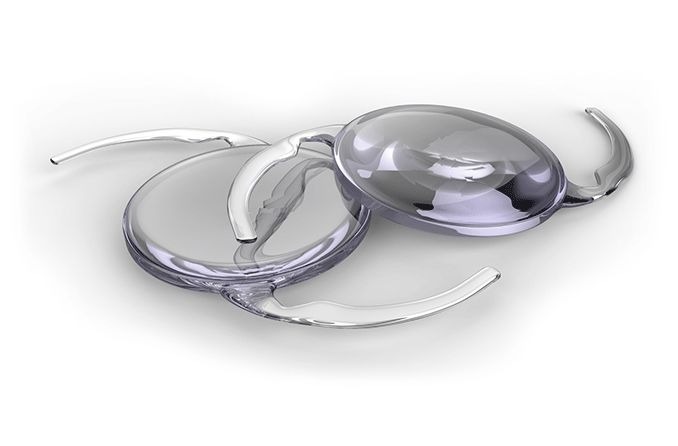
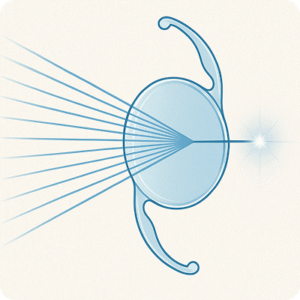 Monofocal LensThe standard IOL used in traditional cataract surgery. Provides good distance vision, though glasses are still needed for close work and possibly for intermediate tasks. |
||||
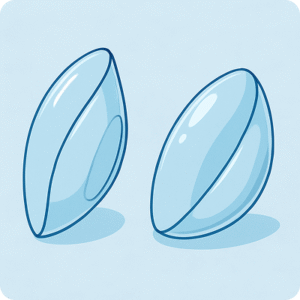
 Monovision LensOne eye is corrected for near vision and the other for distance — the same principle as monovision contact lenses — giving good near and distance sight with very little need for glasses. |
||||
 Multifocal Lens (PanOptix)A trifocal design that improves near, intermediate and distance vision together, allowing most patients to manage daily life with little need for glasses. |
||||
 Astigmatism-Correcting Lens (Toric)For patients with corneal astigmatism: corrects both the cataract and the astigmatism in a single procedure, restoring quality distance vision. |
State-of-the-Art Equipment — Setting the Standard in Advanced Eye Treatment
Our eye care hospital is equipped with the same precision platforms used by leading ophthalmology centres worldwide.
Advanced eye treatment demands advanced tools. At MediVision, we have invested in surgical equipment that gives our eye specialist doctors the highest degree of precision, safety, and control — and our patients the best possible outcomes.
CATALYS Precision Laser System
Abbott Medical OpticsDelivers femtosecond laser energy guided by real-time 3D OCT imaging, enabling custom-tailored cataract surgery with sub-micron accuracy — the same precision technology behind LASIK.
Centurion Vision System
AlconActive Fluidics™ continuously monitors and adjusts intraocular pressure during surgery, while OZil Intelligent Phaco delivers torsional ultrasound efficiently, minimising thermal stress for faster recovery.
Alcon UNITY® Cataract System
AlconNext-generation surgery technology with Intelligent Fluidics™ and UNITY® 4D Phaco, enabling faster, more efficient lens removal with less energy delivered into the eye.
IOLMaster® 700
Carl ZeissSwept-source OCT technology captures full-length axial eye measurements — axial length, keratometry, anterior chamber depth, lens thickness — for precise IOL power calculation.
ARGOS® Optical Biometer
AlconCombines swept-source OCT with advanced biometric analysis for precise ocular measurements and IOL power calculations, integrating with digital surgical planning for image-guided intraoperative tracking and toric IOL alignment.
Your Cataract Surgery Journey — Step by Step
From your first eye checkup to complete recovery — every step is supported.
Comprehensive Eye Checkup & Cataract Assessment
A full eye examination including visual acuity testing, slit-lamp assessment, intraocular pressure measurement, dilated fundus evaluation, and IOLMaster/ARGOS biometry — simultaneously screening for glaucoma, retina disease, dry eye, and corneal pathology.
IOL Selection & Pre-Surgical Counselling
Your eye specialist presents all relevant IOL options with clear, honest guidance on expected outcomes, limitations, and costs. No decision is rushed — you leave with a full understanding of your treatment plan.
Pre-Operative Preparation
Our clinical team prepares you with a brief pre-operative health check, eye drop instructions, and a walkthrough of what to expect on the day of surgery.
Cataract Surgery — Day Procedure
Performed under local anaesthesia; you remain comfortable and awake. The procedure takes 15–30 minutes per eye. You return home the same day with a family member.
Post-Operative Recovery
Vision improvement is typically noticeable within 24–48 hours. Full recovery and visual stabilisation take 4–6 weeks, with complete written aftercare instructions and direct access to your care team.
Final Review & Ongoing Comprehensive Eye Care
Your surgeon confirms recovery and provides any residual spectacle prescription needed. Long-term eye care — retina, glaucoma, dry eye — continues as part of your ongoing relationship with us.
Why Choose MediVision Eye Care Hospital for Cataract Surgery?
NABH-Accredited Eye Care Hospital
Every surgical and clinical process — from theatre sterility and equipment protocols to patient safety and post-operative care — meets NABH accreditation standards: independently certified, audited quality.
1.20 Lakh+ Cataract Surgeries
Our eye specialist doctors have collectively performed over 1.20 lakh cataract procedures — routine, dense mature, traumatic, and paediatric cases — the foundation of consistently safe, high-quality outcomes.
Comprehensive Eye Care — Not Just Surgery
Cataract treatment exists within a broader framework of comprehensive eye care. We identify and manage co-existing conditions as part of every consultation — whole-eye care, not just a single procedure.
Complete Vision Correction Range
From basic monofocal IOLs to premium toric-multifocal and scleral fixated lenses, and from standard phacoemulsification to blade-free femtosecond laser surgery — every option is available.
Paediatric Eye Care for Congenital Cataracts
Congenital and developmental cataracts in children require prompt diagnosis, appropriately timed surgery, and amblyopia management — handled by our dedicated paediatric eye care team.
Transparent Pricing & Insurance
Our pricing is communicated clearly, with no hidden costs. We are empanelled with major health insurance providers and government health schemes, and assist with all documentation.
Clear Vision Is Within Reach. Our Eye Care Hospital Is Ready to Help.
Cataract surgery at MediVision is more than a procedure — it is part of a commitment to comprehensive eye care that begins with your first eye checkup and continues for life. Your vision deserves the highest standard of care.